Radiation Effects Steering Group Awards
Additional information regarding the Radiation Effects Committee (REC), the Radiation Effects Steering Group (RESG), past Radiation Effects Award winners, and NSREC and NPSS Awards can be found at ieee-npss.org/technical-committees/radiation-effects/.
2026 Award Recipients
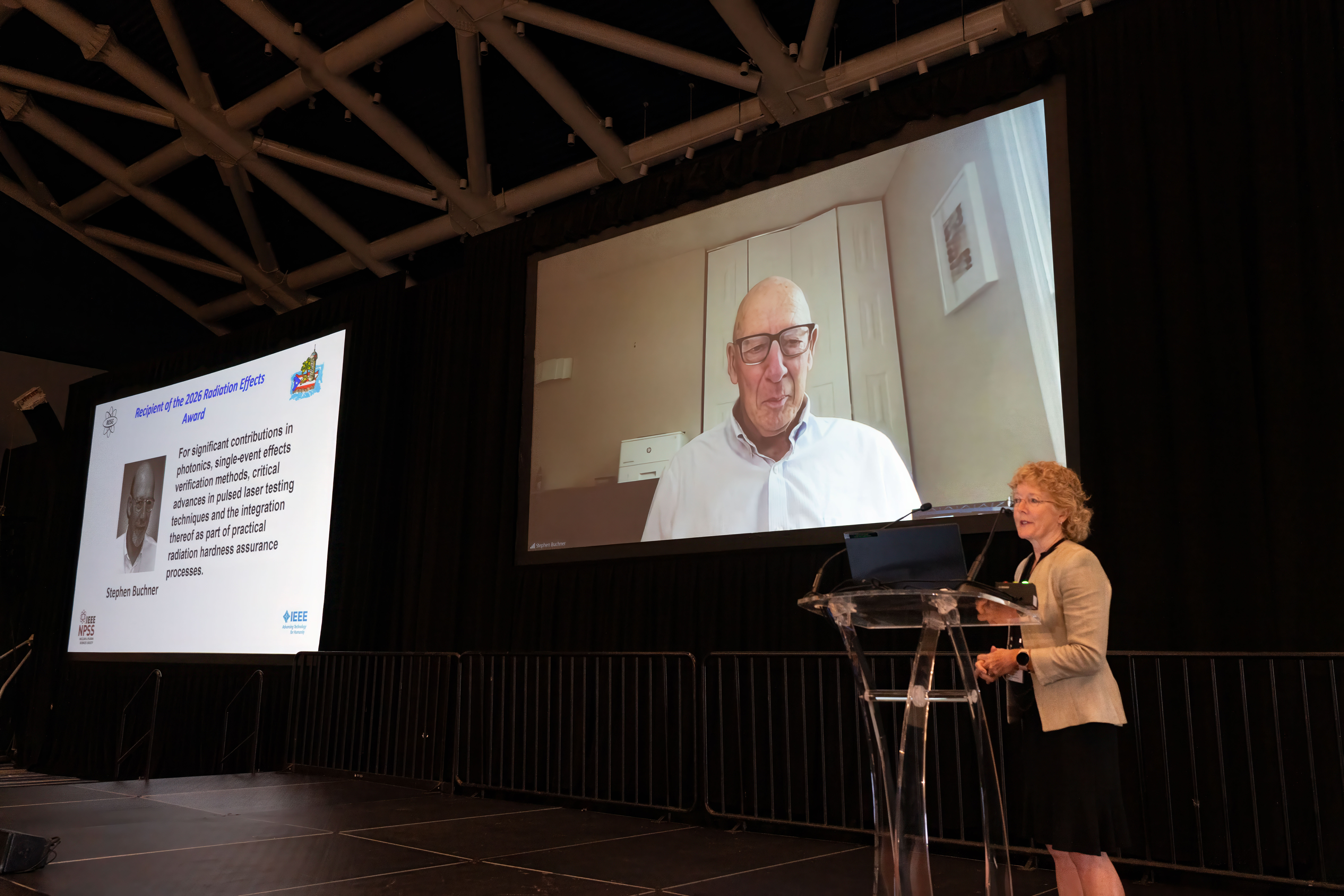
2026 Radiation Effects Award
Stephen Buchner
For significant contributions in photonics, single-event effects verification methods, critical advances in the development of pulsed laser techniques and the integration thereof as part of practical radiation hardness assurance processes.
Past recipients of the Radiation Effects Award
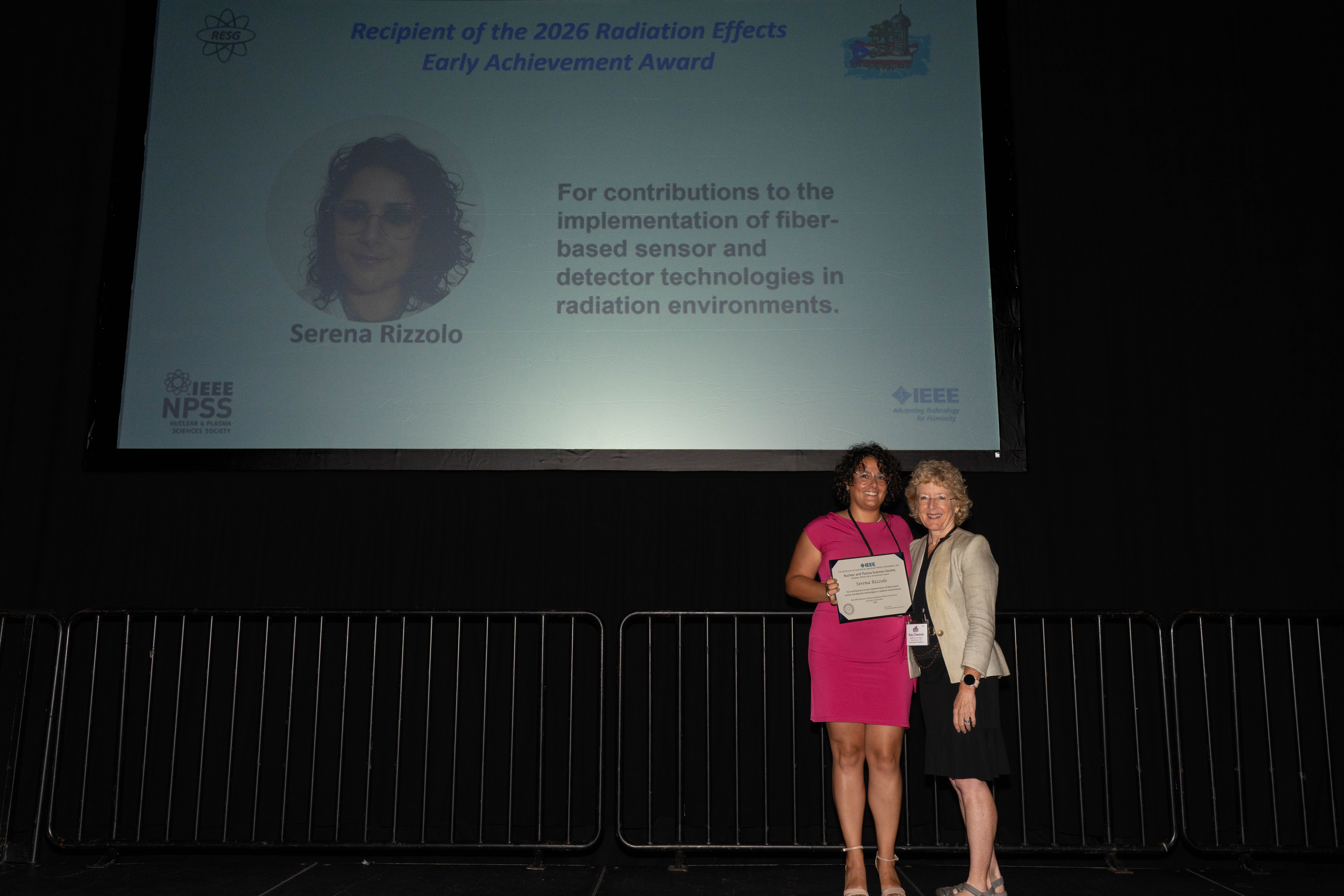
2026 Radiation Effects Early Achievement Award
Serena Rizzolo
For contributions to the implementation of fiber-based sensor and detector technologies in radiation environments.
Past recipients of the Early Achievement Award
2025 NSREC Paper Awards
Presented at NSREC 2026 in San Juan for papers and presentations from NSREC 2025 in Nashville.
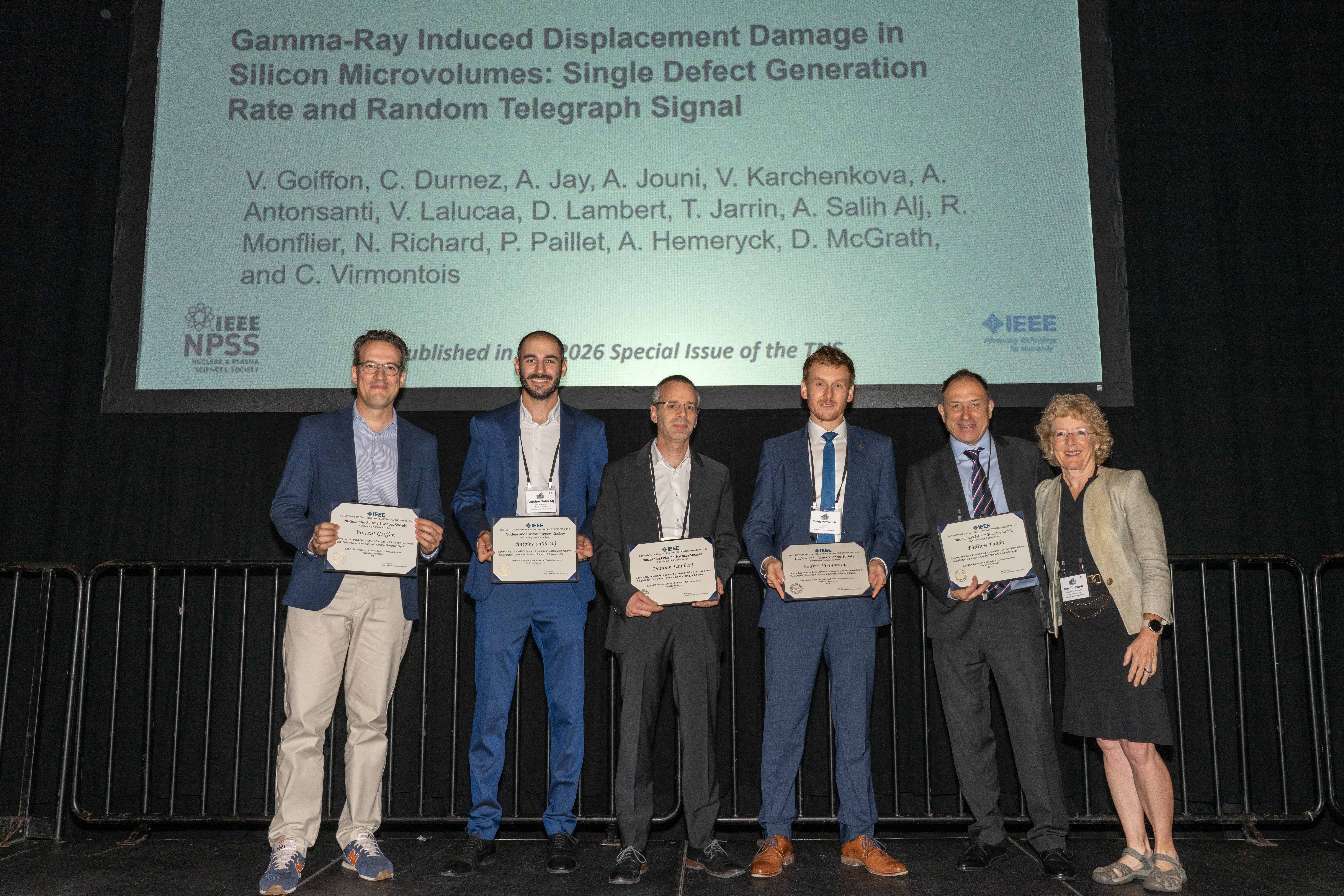
- Outstanding Conference Paper AwardGamma-Ray Induced Displacement Damage in Silicon Microvolumes: Single Defect Generation Rate and Random Telegraph SignalVincent Goiffon, Clementine Durnez, Antoine Jay, Ali Jouni, Vera Kharchenkova, Aubin Antonsanti, Valerian Lalucaa, Damien Lambert, Thomas Jarrin, Antoine Salih Alj, Richard Monflier, Nicolas Richard, Philippe Paillet, Anne Hemeryck, Daniel McGrath, and Cedric Virmontois
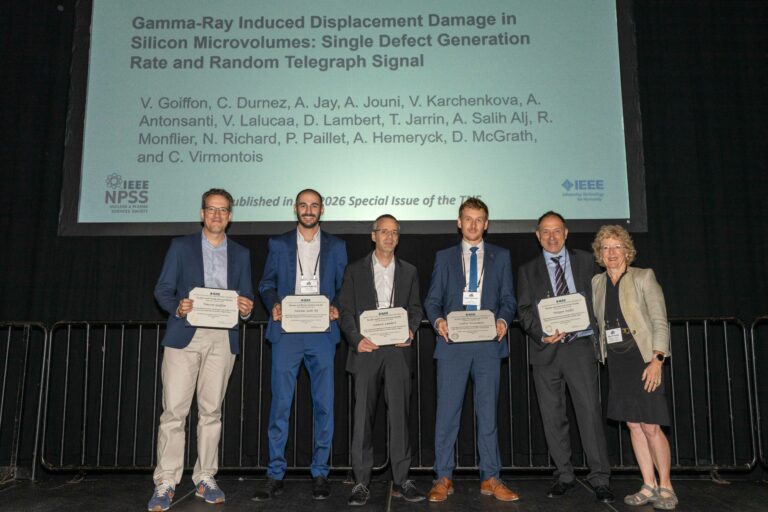
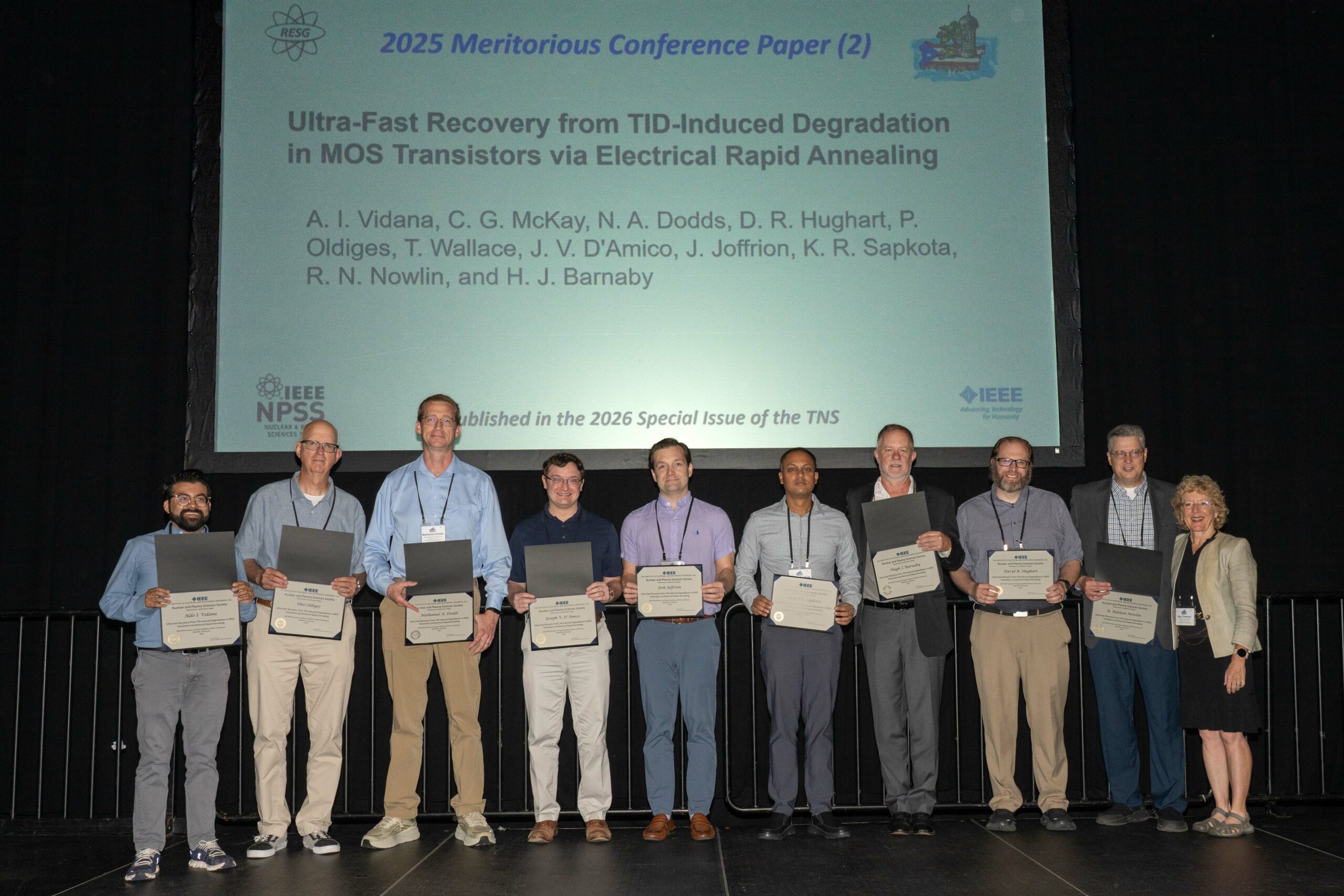
Authors with Kay Chesnut at NSREC 2026 in San Juan. - Meritorious Conference Paper AwardUltra-Fast Recovery from TID-Induced Degradation in MOS Transistors via Electrical Rapid AnnealingAldo I. Vidana, Colin G. McKay, Nathaniel A. Dodds, David R. Hughart, Phil Oldiges, Trace Wallace, Joseph V. D’Amico, Josh Joffrion, Keshab R. Sapkota, R. Nathan Nowlin, and Hugh J. Barnaby
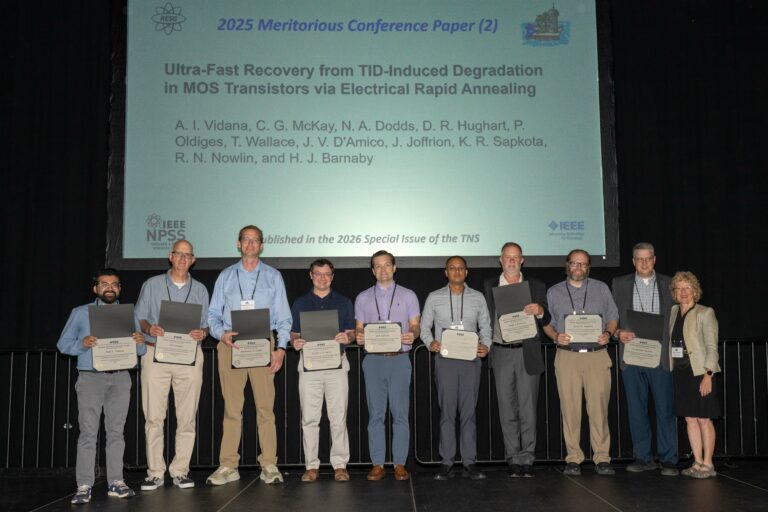
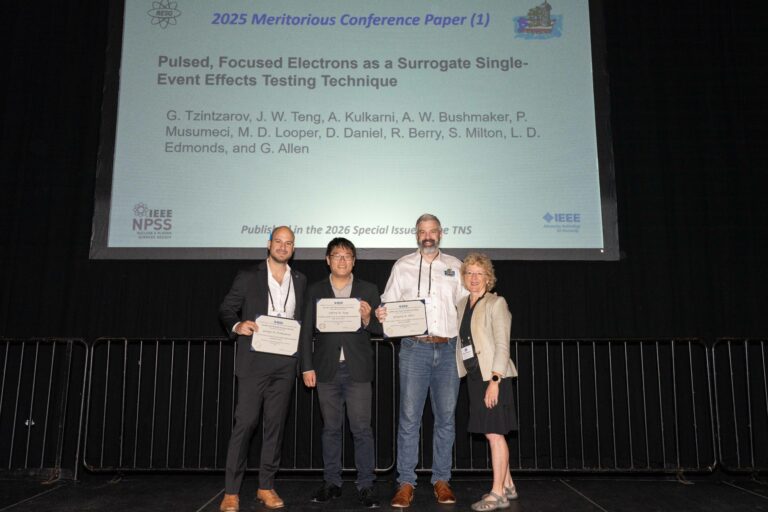
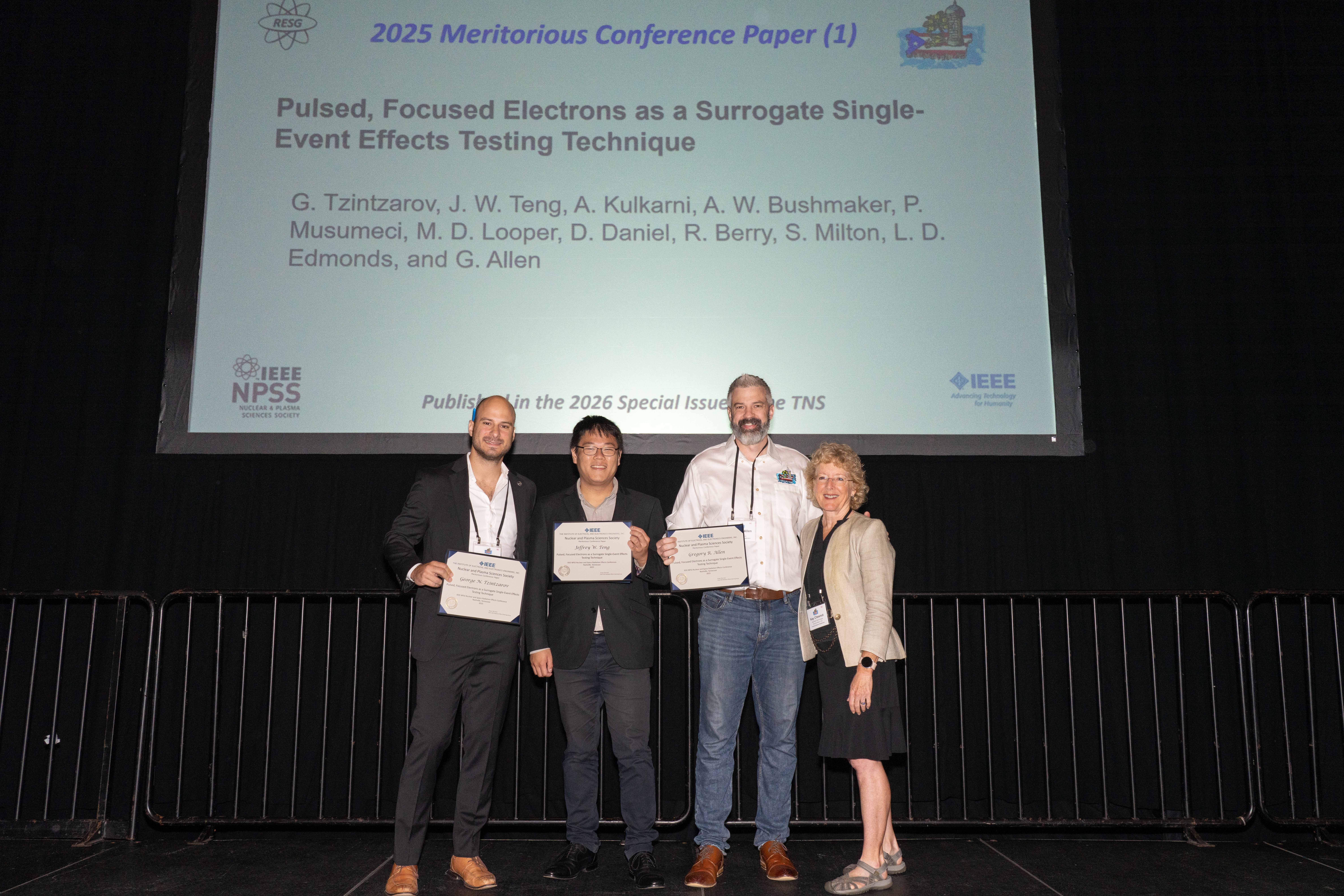
Authors with Kay Chesnut at NSREC 2026 in San Juan. - Meritorious Conference Paper AwardPulsed, Focused Electrons as a Surrogate Single-Event Effects Testing TechniqueGeorge N. Tzintzarov, Jeffrey W. Teng, Atharva Kulkarni, Adam W. Bushmaker, Pietro Musumeci, Mark D. Looper, Dicky Daniel, Robert Berry, Stephen Milton, Larry D. Edmonds, and Gregory R. Allen
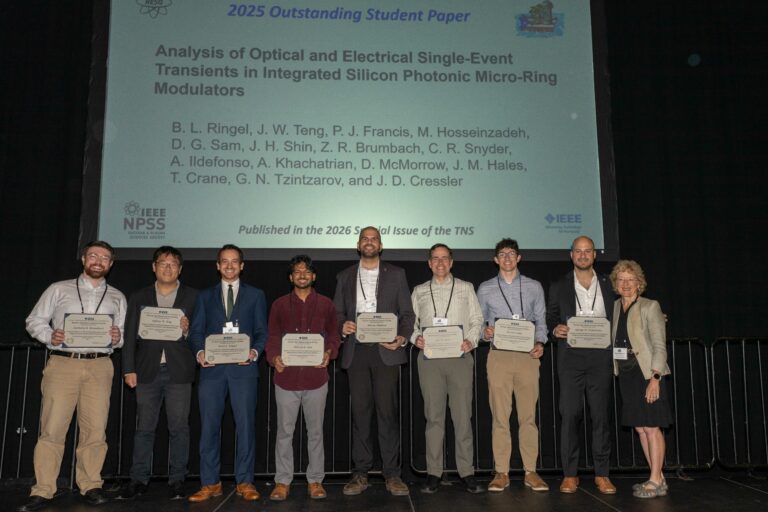
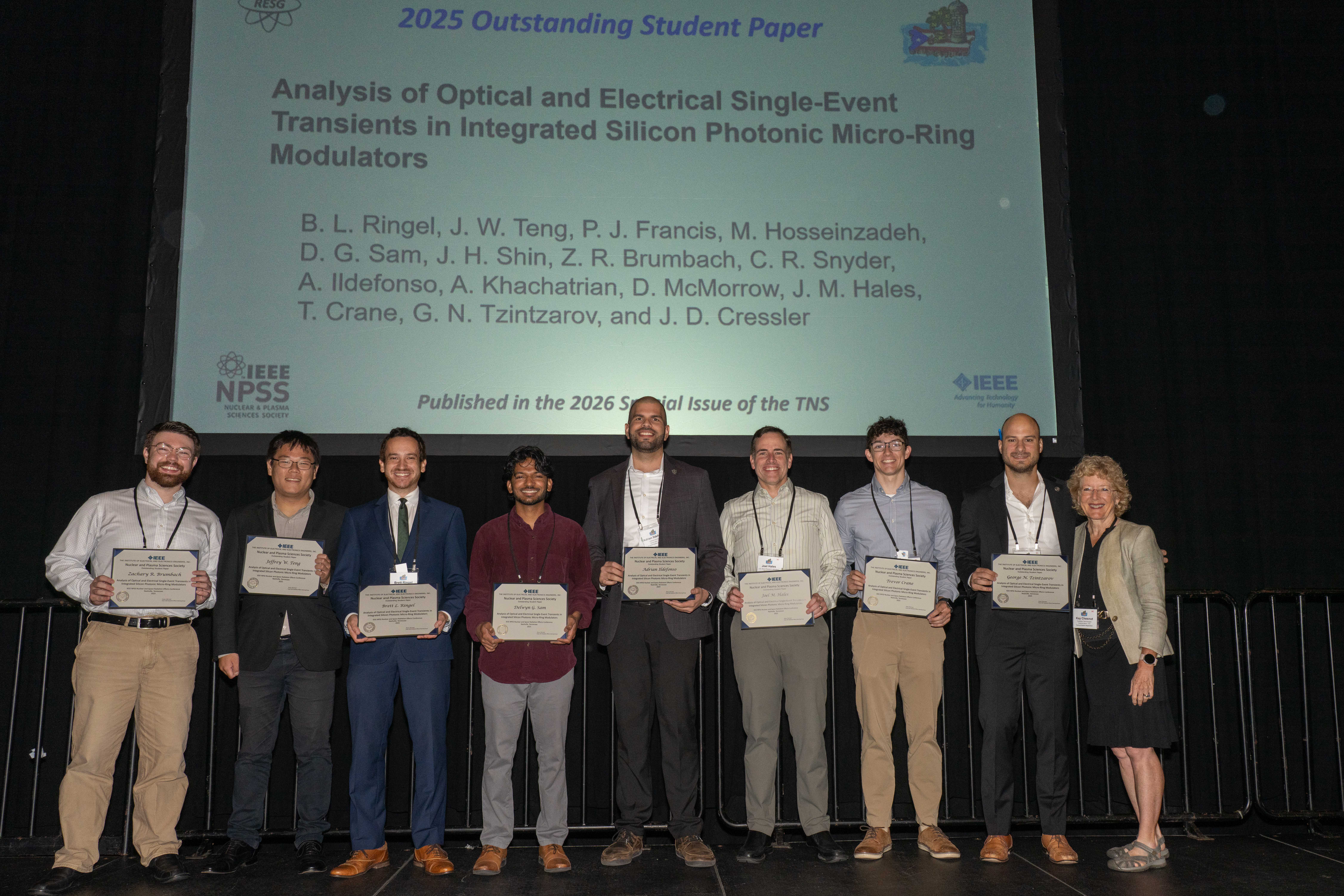
Authors with Kay Chesnut at NSREC 2026 in San Juan. - Outstanding Student Paper AwardAnalysis of Optical and Electrical Single-Event Transients in Integrated Silicon Photonic Micro-Ring ModulatorsBrett L. Ringel, Jeffrey W. Teng, Peter J. Francis, Mozhgan Hosseinzadeh, Delwyn G. Sam, James H. Shin, Zachary R. Brumbach, Christopher R. Snyder, Adrian Ildefonso, Ani Khachatrian, Dale McMorrow, Joel M. Hales, Trevor Crane, George N. Tzintzarov, and John D. Cressler
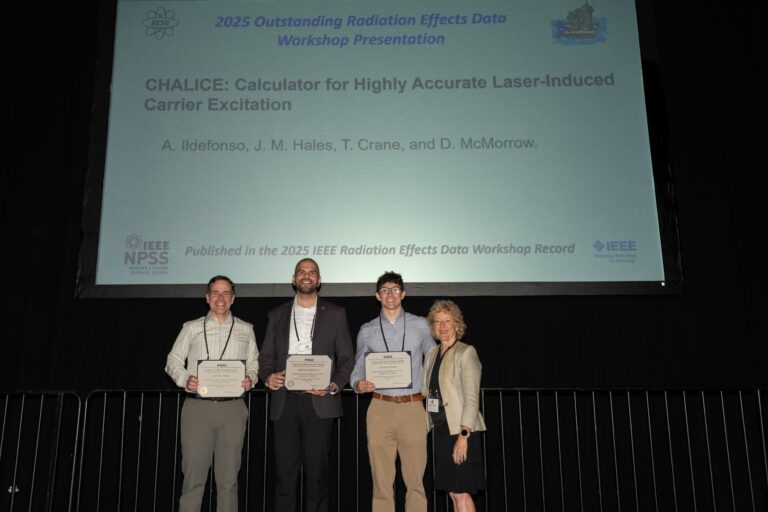
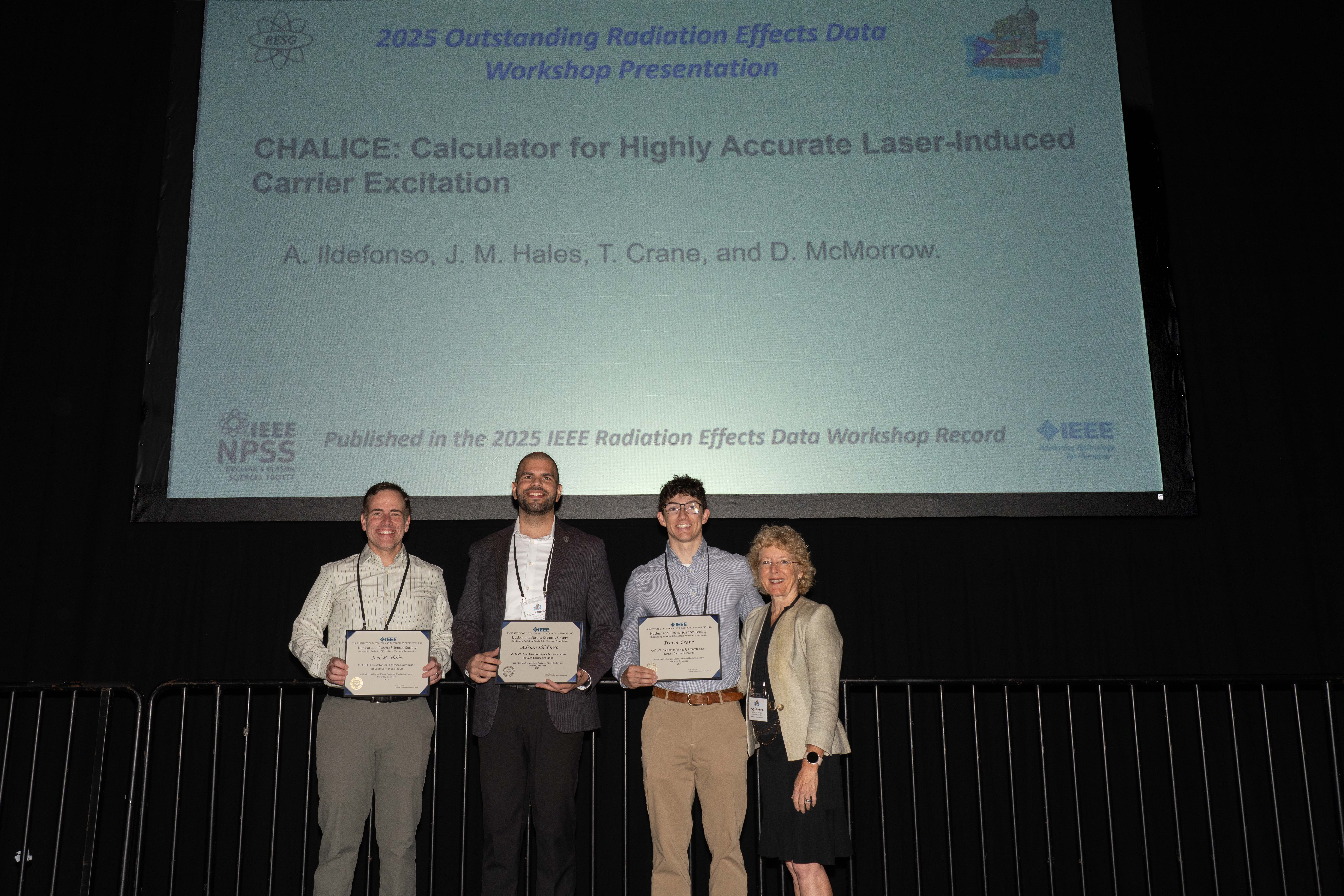
Authors with Kay Chesnut at NSREC 2026 in San Juan. - Outstanding Data Workshop Presentation AwardCHALICE: Calculator for Highly Accurate Laser-Induced Carrier ExcitationAdrian Ildefonso, Joel Hales, Trevor Crane, and Dale McMorrow
Authors with Kay Chesnut at NSREC 2026 in San Juan.
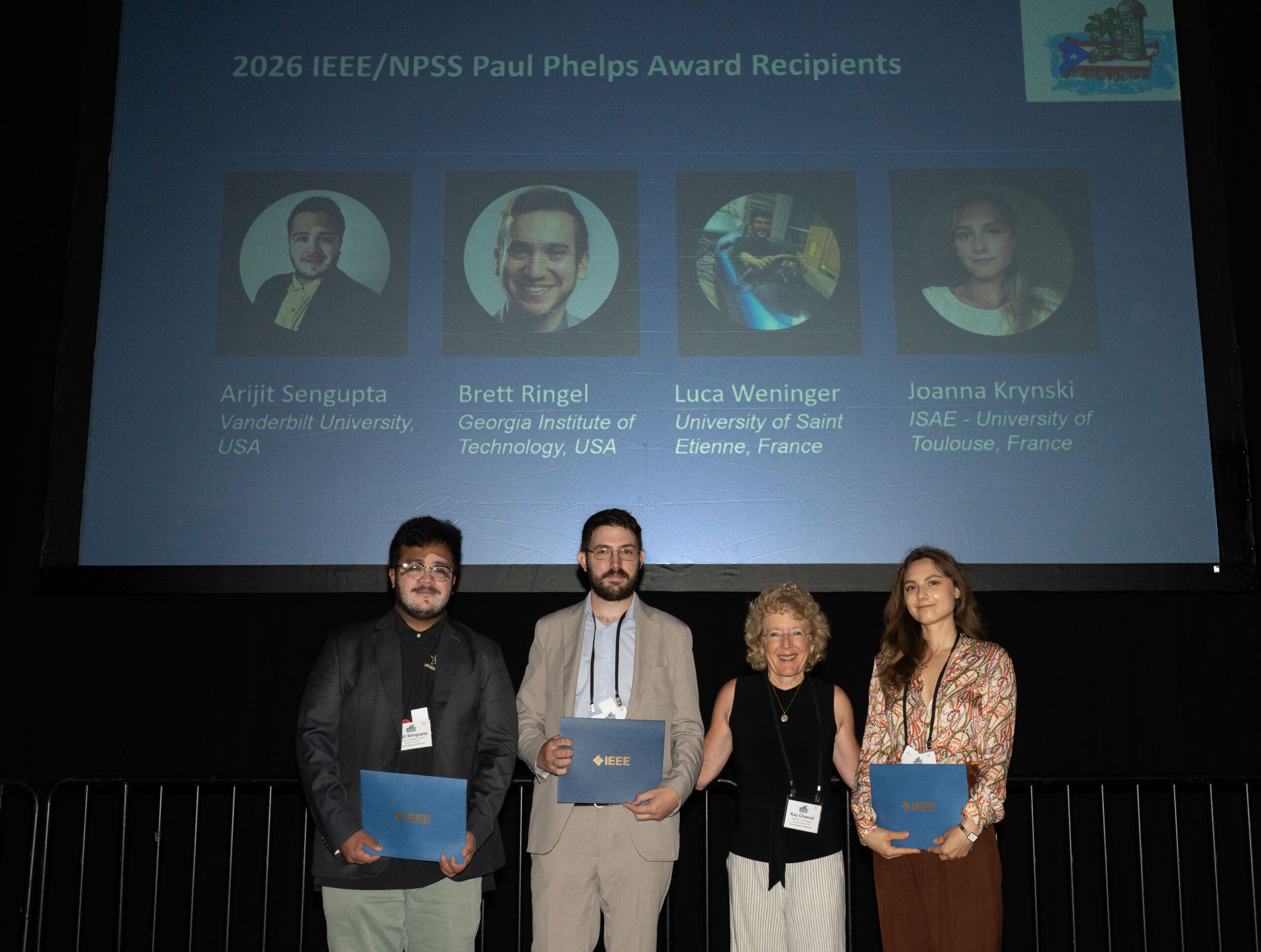
2026 IEEE/NPSS Paul Phelps Continuing Education Grant Recipients
Arijit Sengupta
Vanderbilt University, USA
Brett Ringel
Georgia Institute of Technology, USA
Luca Weninger
University of Saint Etienne, France
Joanna Krynski
University of Toulouse, France
Nominations for the 2027 Awards
Nominations are currently being accepted for the 2027 Radiation Effects Award and the 2027 Radiation Effects Early Achievement Award. The deadline for submitting nominations is January 29.
The winners of the awards will be announced Tuesday morning, July 20 at the 2027 NSREC in Atlanta, GA. Cash awards and plaques will be presented at that time.
Please submit nominations online by following links to the Radiation Effects Award Submission, the Radiation Effects Early Achievement Award Submission and the Radiation Effects Award for Exemplary Service Submission. Please reach out to Justin Likar, Senior Member-at-Large for the Radiation Effects Steering Group, with any questions. Justin can be contacted at Justin.Likar@jhuapl.edu.
Radiation Effects Award
The purpose of the Radiation Effects Award is to recognize individuals who have had a sustained history of outstanding and innovative technical and/or leadership contributions to the radiation effects community. The basis of the award is for individuals who have: (1) a substantial, long-term history of technical contributions that have had major impact on the radiation effects community. Examples include benchmark work that initiated major research and development activities or a major body of work that provided a solution to a widely recognized problem in radiation effects; and/or (2) a demonstrated long-term history of outstanding and innovative leadership contributions in support of the radiation effects community. Examples include initiation or development of innovative approaches for promoting cooperation and exchange of technical information or outstanding leadership in support of the professional development of the members of the radiation effects community.
Radiation Effects Early Achievement Award
The purpose of the Radiation Effects Early Achievement Award is to recognize an individual early in his or her career whose technical contributions and leadership have had a significant impact on the field of radiation effects. The basis of the award is for individuals whose technical contributions and leadership during the first ten years of the recipient’s career that have had a major impact on the Radiation Effects Community. Examples include work that provides a solution to important technical problems in radiation effects or work that identifies significant new issues in the field. Other factors are cumulative research contributions over the first part of the career, internationally recognized leadership, and mentorship. It is the intent of the RESG to give special consideration for this award to members of the community who are IEEE/NPSS members.
Suggested Nomination Strategy
At the 7th or 8th year mark in the individual’s career, evaluate the impact of the meritorious criteria that supports an NPSS nomination. A good resource to check is the citations for past awardees (ieee-npss.org/technical-committees/radiation-effects/). Note that there is strong emphasis on pioneering technical contributions and less emphasis on leadership. If you feel the nomination will be competitive, submit the individual for the NPSS Award at this time.
In the case that the individual is not selected, there is still time to submit a nomination for the Radiation Effects Award.
In the case that the individual is selected, he or she has another year or two to excel in a different aspect of his or her work and could possibly qualify for the Radiation Effects Early Career Award.
Radiation Effects Award for Exemplary Service to Meetings and Conferences
The purpose of the award is to recognize a member of the Radiation Effects community who has demonstrated exemplary services to the meetings and conferences of the Radiation Effects Committee over a sustained period. The basis of the award is for members of the Radiation Effects community who have demonstrated exemplary services to the meetings and conferences of the Radiation Effects Committee over a sustained period of at least five years. Student members are not eligible to be nominated for the award. The nominee is not required to be a member of the IEEE and NPSS.
Past recipients of the Radiation Effects Award for Exemplary Service
Phelps Continuing Education Grant
Grant Description
To promote continuing education and encourage membership in NPSS.
Nominations are currently being accepted for the Paul Phelps Continuing Education Grant. The deadline for submitting nominations is January 29 of each year.
Selection Criteria
Exceptional promise as a student, postdoc or research associate in any of the fields of NPSS, or exceptional work in those fields by currently unemployed NPSS members with an expectation that attendance to one or more of the Short Courses will result in an improved possibility of obtaining a job in an NPSS field.
Eligibility
Outstanding members of NPSS who are either Student Members, Post-Doctoral Fellows or Research Associates, or unemployed members needing assistance in changing career direction.
Grant Presentation and Prize
$750 will be provided to each grant recipient to be used to cover tuition costs and/or travel costs to attend the current year IEEE NSREC Short Course and a certificate will be presented at the IEEE NSREC Short Course.
Nomination Form
Please follow the link to the Phelps Continuing Education Grant online form to nominate a candidate. Additional information can be obtained from Justin Likar, Senior Member-at-Large for the Radiation Effects Steering Group. Justin can be reached at Justin.Likar@jhuapl.edu.